Injury Recovery & Clinical Care
RMT for an Acute Ankle Sprain: When Massage Therapy Can Help
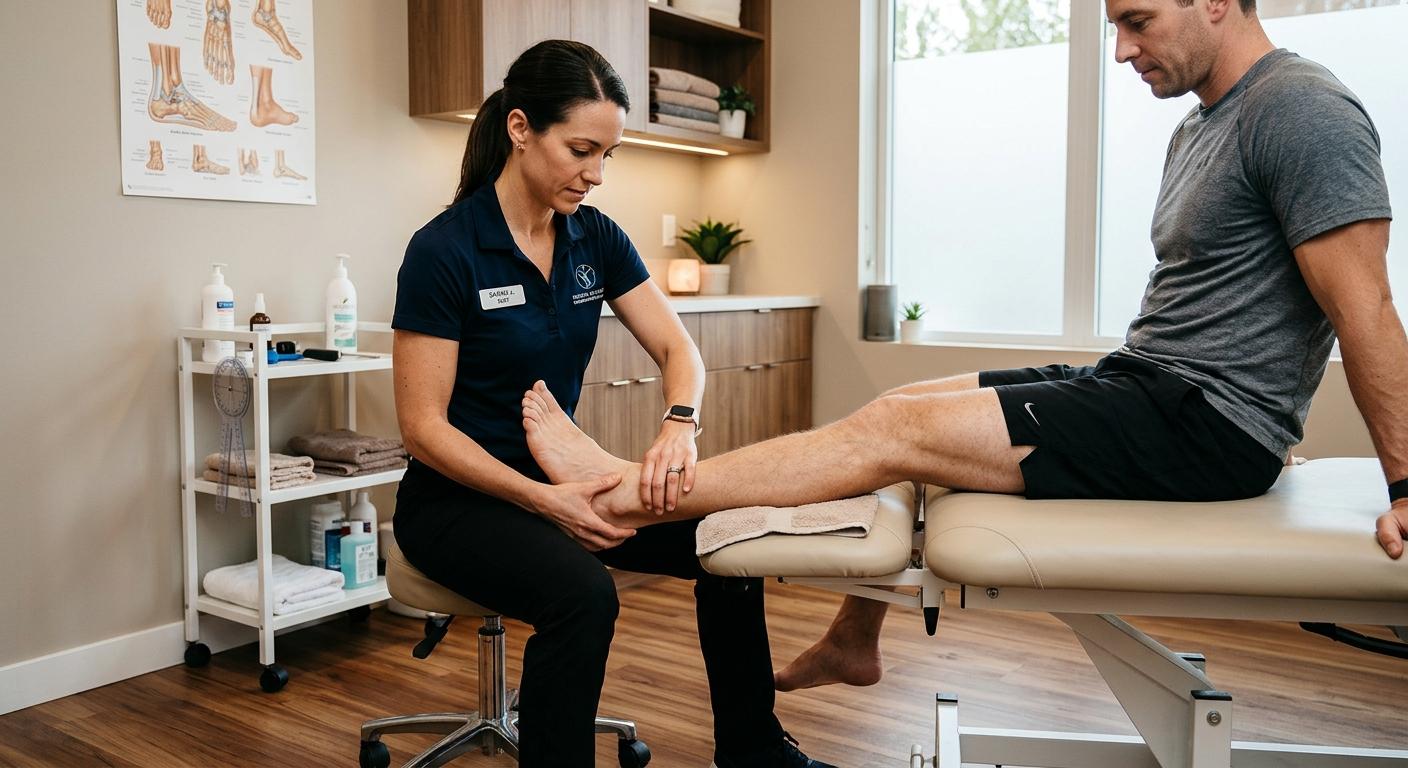
An ankle sprain can happen from a simple misstep, sports injury, or awkward landing. Pain, swelling, bruising, and difficulty walking are common symptoms. Many people across Vancouver and Richmond wonder whether Registered Massage Therapy (RMT) can safely help an acute ankle sprain.
The short answer is that ankle sprain massage therapy may support overall recovery, but timing and treatment approach are critical. Massage directly over a newly injured ankle may not be appropriate during the earliest stage of injury. An initial orthopedic assessment by a qualified healthcare professional or RMT can help determine the safest treatment plan.
What Is an Acute Ankle Sprain?
An acute ankle sprain is a recent musculoskeletal injury involving the ligaments that provide structural support to the ankle joint. It commonly occurs when the foot rolls or twists beyond its normal anatomical range.
Common clinical signs and symptoms include:
- Localized pain around the lateral or medial ankle structures
- Rapid swelling and soft tissue bruising
- Heightened tenderness to touch
- Reduced passive and active ankle range of motion
- Difficulty standing, weight-bearing, or walking
- A subjective feeling of joint weakness or instability
A severe sprain can sometimes mimic a bone fracture. You should seek immediate medical imaging and assessment if you are unable to take several consecutive steps, experience severe localized pain, notice an obvious joint deformity, or observe excessive acute swelling.
When to Massage a Sprained Ankle: The First 48–72 Hours
During the initial 48 to 72 hours post-injury, the affected area is in the acute inflammatory phase and is highly sensitive. Deep tissue massage, aggressive stretching, and strong mechanical pressure directly over the injured ankle ligaments should be avoided unless explicitly recommended by a physician or physiotherapist.
In this early window, acute ankle sprain care focuses on:
- Protecting the joint structure from secondary injury
- Relative rest combined with gentle, pain-free movement
- Controlled compression to manage fluid pooling
- Elevation above the heart level to minimize edema
- Professional orthopedic triage when indicated
While cold therapy (ice) can offer short-term analgesic relief for some individuals, it should be applied safely and should never replace a comprehensive clinical assessment.
Recovering from a sports or ankle injury?
Our Vancouver and Richmond registered massage therapists provide assessment-driven, evidence-informed care tailored to your healing stage.
Book NowHow Can RMT Help After the Acute Stage?
Once acute inflammation subsides, an experienced RMT utilizes individualized, gentle manual techniques designed to optimize your recovery timeline:
1. Supporting Swelling and Edema Management
Targeted, gentle lymphatic and circulatory techniques can improve overall comfort and support fluid dispersion around the lower leg and foot. Treatment parameters are strictly adapted to your residual tenderness and tissue healing status.
2. Reducing Surrounding Muscle Tension
Following trauma, the calf complex, peroneal muscles, and intrinsic foot musculature frequently hyper-contract to splint and protect the joint. Releasing these surrounding tissues helps alleviate discomfort during walking and gentle loading.
3. Improving Ankle Mobility and Joint Mechanics
Post-sprain joint stiffness can severely restrict range of motion. An RMT coordinates with your broader rehabilitation plan to restore comfortable, fluid movement as tissue integrity improves.
4. Addressing Compensatory Movement Patterns
Altered gait due to ankle pain often creates secondary mechanical tension in the knee, hip, pelvis, or lower back. Comprehensive RMT care evaluates and treats these regional compensation patterns.
5. Supporting a Gradual Return to Activity
Massage therapy functions as an effective component of an active rehabilitation program. Depending on injury grade, recovery often integrates progressive strengthening, proprioceptive balance training, and dynamic mobility work.
When Should You See an RMT for an Ankle Sprain?
Consider booking an RMT clinical assessment when:
- Initial sharp pain and acute swelling have begun to subside
- You can tolerate gentle, light touch around the ankle complex
- You require clinical assistance managing surrounding muscular hypertonicity
- Your joint feels stiff or restricted following the acute phase
- You are transitioning back to daily walking, work duties, or athletics
- You have received clearance from your primary healthcare provider
Your treatment session begins with a detailed intake and orthopedic screen, ensuring all techniques are entirely non-invasive and pain-free.
When to Avoid Massage & Seek Immediate Medical Care
- Severe, worsening, or unmanageable pain levels
- Total inability to bear weight or take 4 steps
- Massive, rapidly spreading ecchymosis (bruising) or swelling
- Paresthesia, numbness, or loss of sensation in the foot
- Visible structural joint deformity
- Point-exact tenderness directly over bone (e.g., malleoli or midfoot)
- Recurrent, chronic joint instability
- Symptoms failing to improve over standard recovery milestones
If you exhibit any of these signs, please consult a physician, sports medicine doctor, or physiotherapist immediately for diagnostic evaluation.
Expected Healing Timelines for Ankle Sprains
Recovery duration depends heavily on tissue grade severity, general health status, and adherence to evidence-based rehabilitation. Minor grades may resolve in a few weeks, while grade II or III sprains require structured multi-week care protocols.
Returning to vigorous sport or high-impact activities prematurely heightens reinjury risk. Functional clearance should be determined by pain-free range of motion, restored dynamic balance, and functional strength—not merely elapsed calendar days.
Book Your RMT Assessment for Ankle Sprain Recovery
Registered massage therapy serves as a valuable pillar in structured orthopedic rehabilitation. By respecting acute healing windows and focusing on individualized clinical care, you can safely restore your mobility.
Contact our clinic to schedule an assessment with an experienced Registered Massage Therapist in Vancouver. Direct billing is available for most major insurance providers.
Ready to feel better?
Book your appointment today and let our Registered Massage Therapists build a plan around your needs.
Book Your Appointment